
Bowed rail costs more
A door that popped one roller off a straight track is a different job than a door with a bowed rail on one side and a misaligned top section.
Sugar Land, TX
Off-track doors are common in Sugar Land's 1976-2015 housing stock. Learn why it happens here, what drives the repair cost, and when a track fix isn't enough.
Warning signs
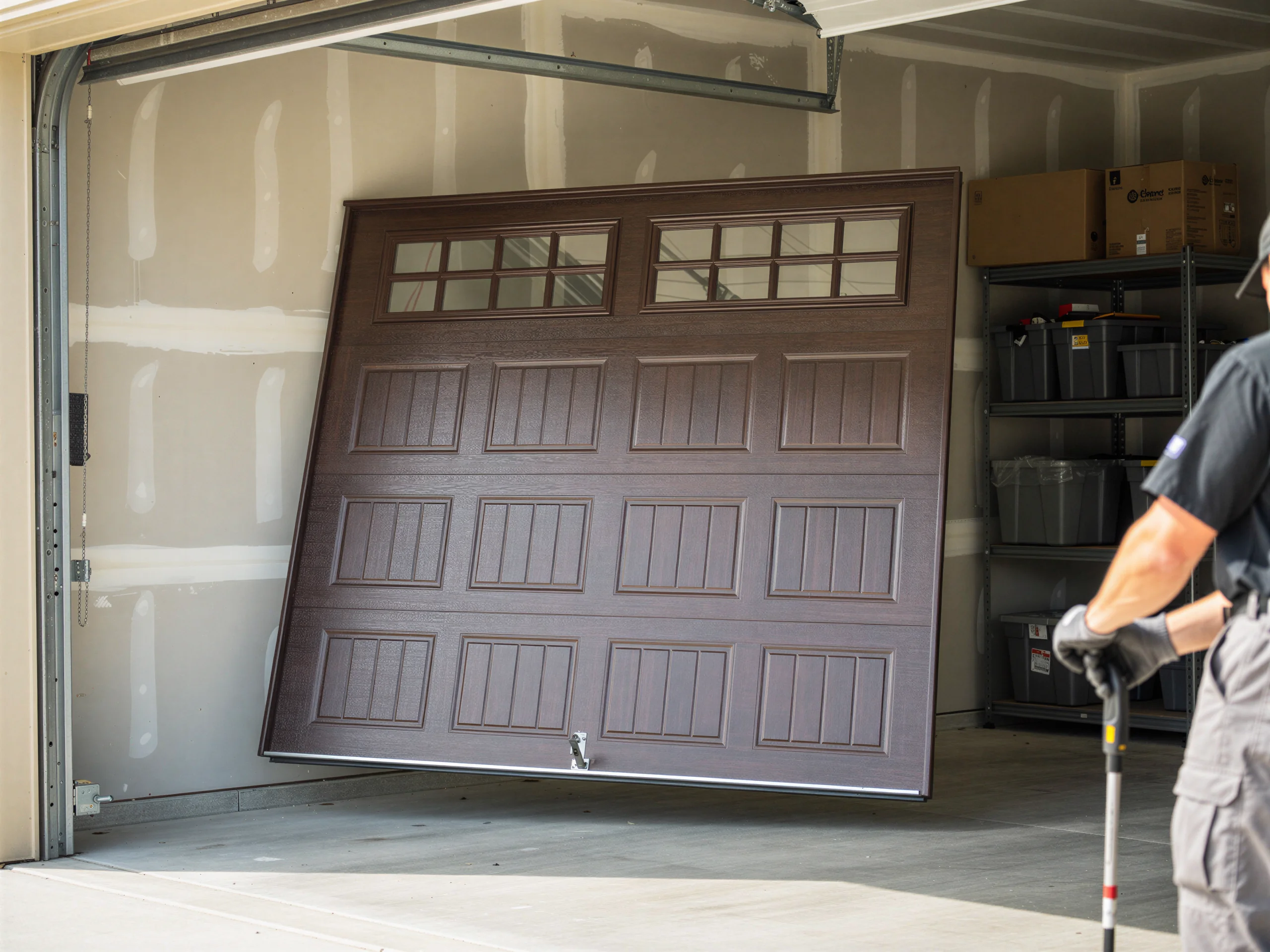
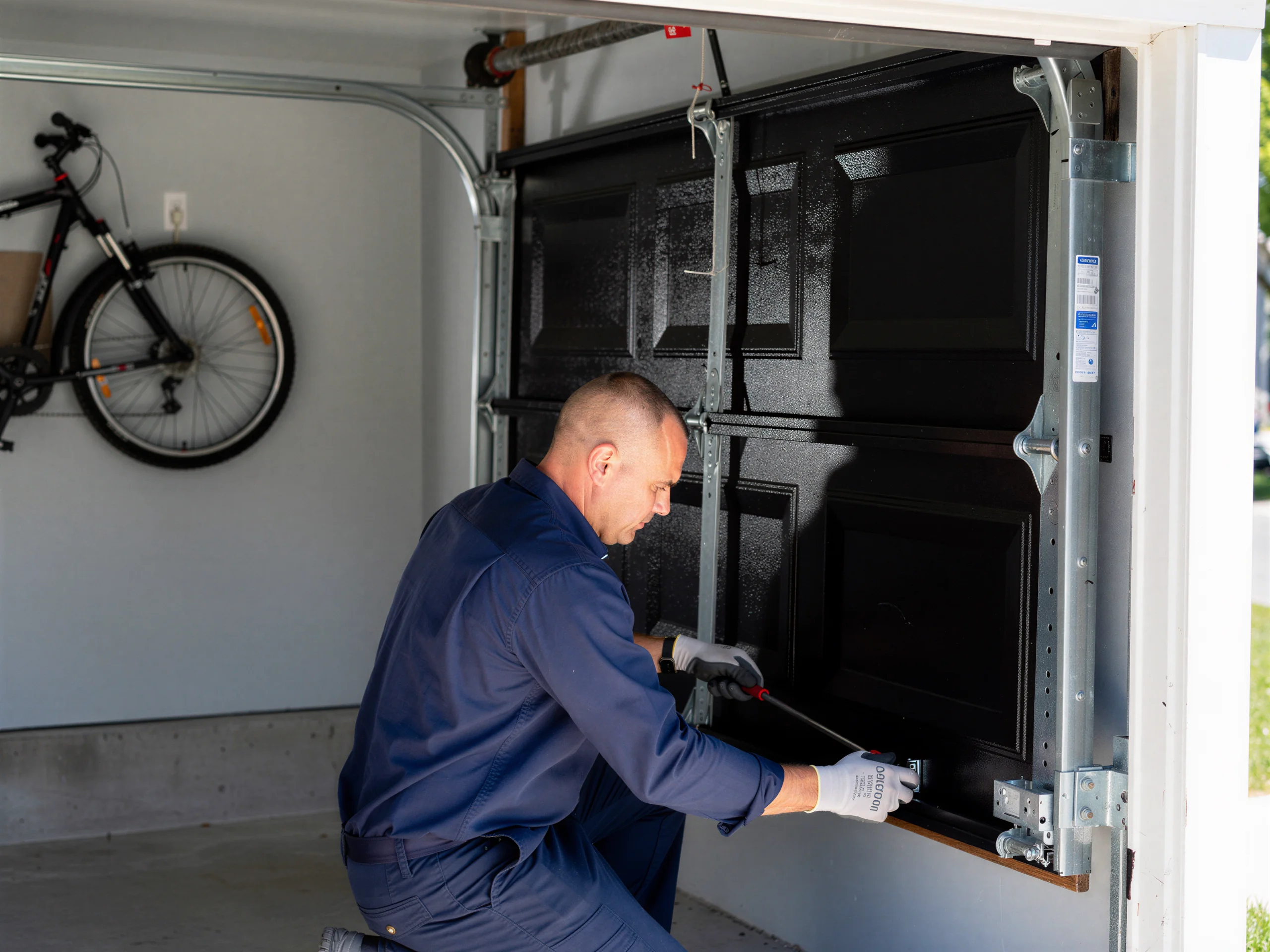
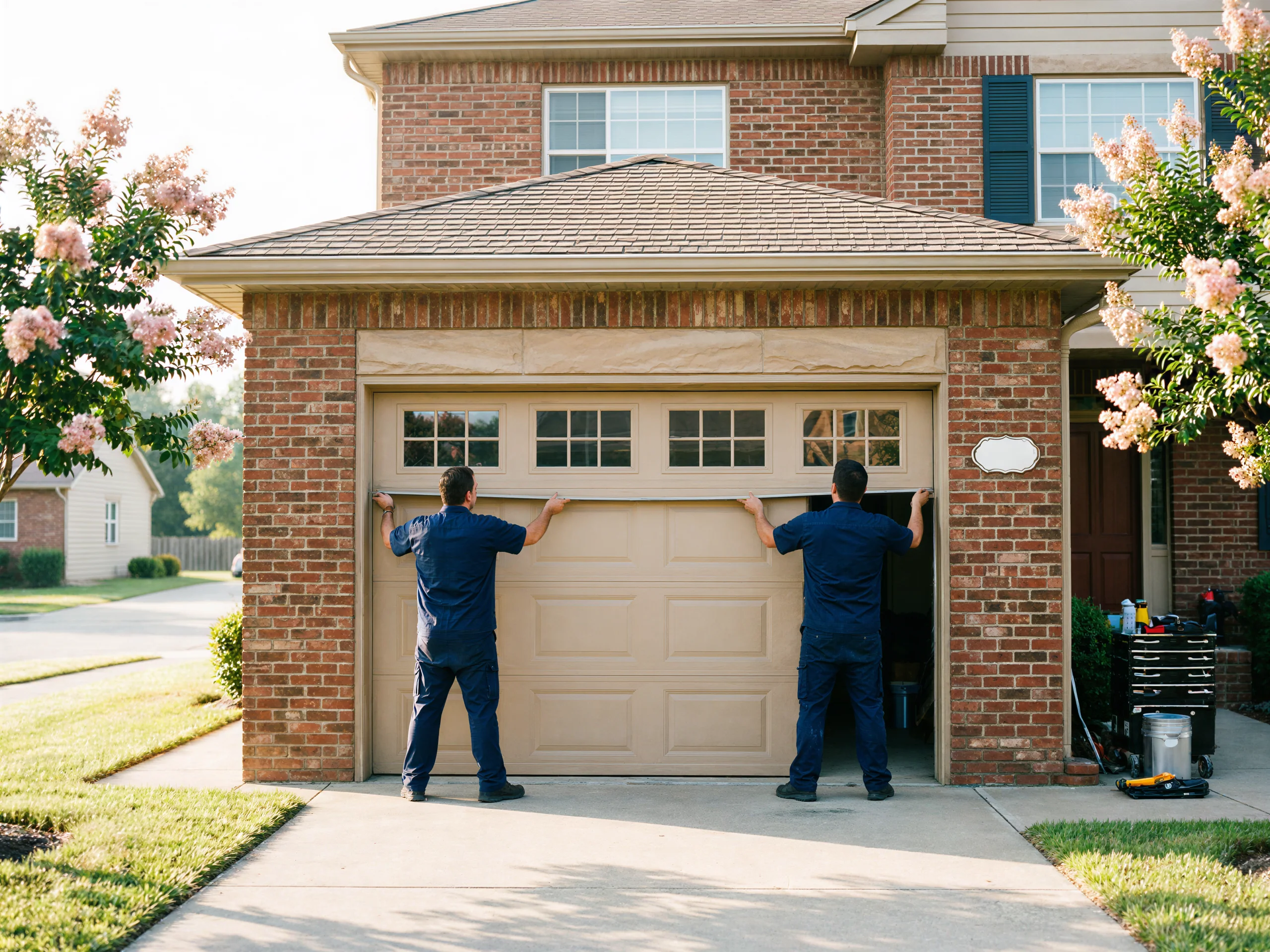
A door off track doesn't always look dramatic. Sometimes it's a panel sitting crooked in the opening, a roller popped clean out of the rail, or the door stuck halfway with one side higher than the other. Other times it's obvious - the door hangs at an angle and won't move without grinding metal on metal.
Most of what we see falls into two camps: the door that was forced off by an impact (a car bumper, a stray basketball, a kid leaning on the bottom panel) and the door that walked itself off the track slowly, through worn rollers, a bent rail, or cables that stretched and let one side of the door drop lower than the other. The second kind is more common across the houses we work on, and it's the one owners usually miss until the door binds completely.
If the door still closes but makes a grinding or popping noise partway through the cycle, that's usually a roller riding the edge of a bent track, not a fully derailed door yet. Catching it there is cheaper and safer than waiting for the whole panel to come loose.
Local causes
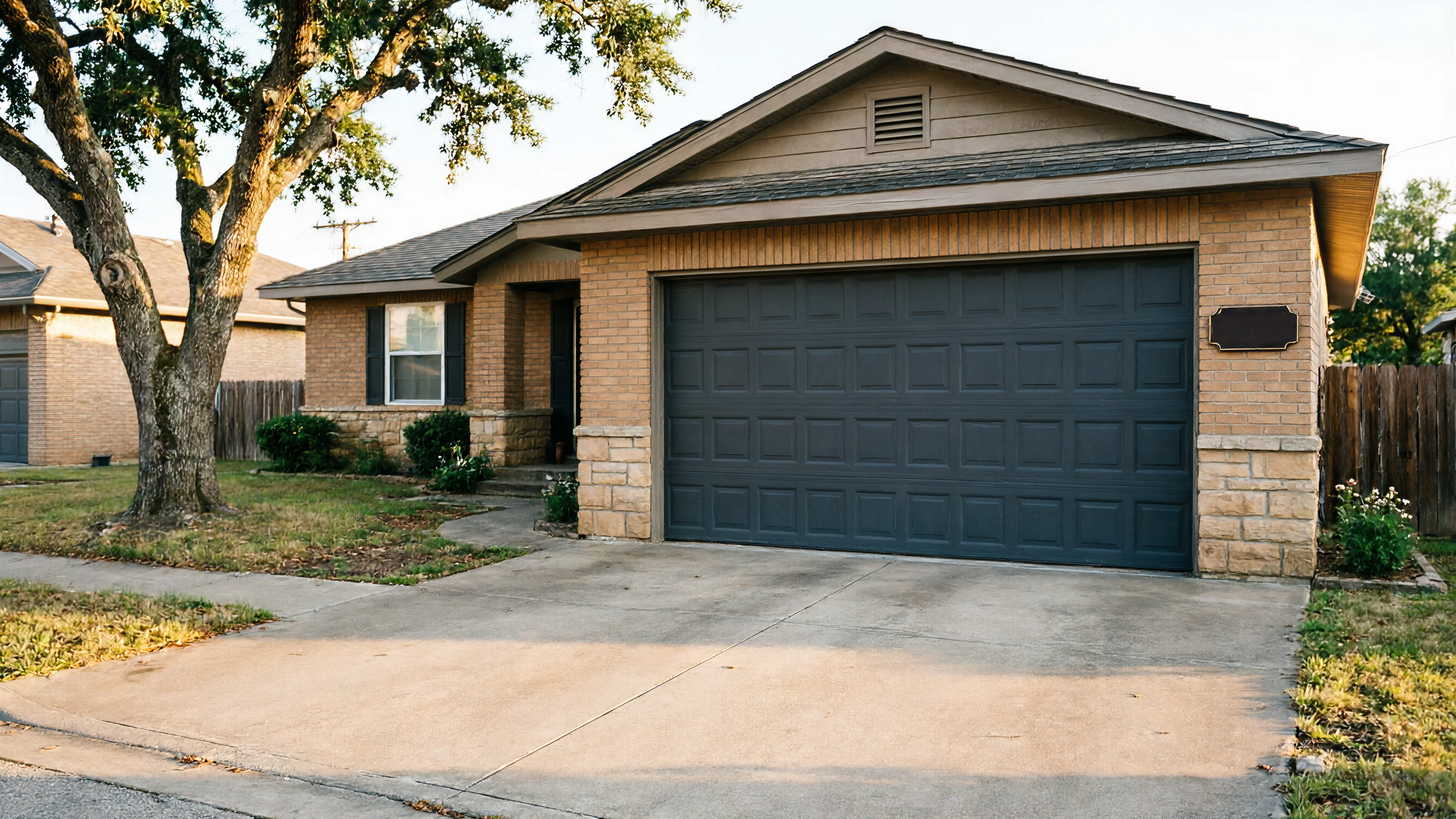
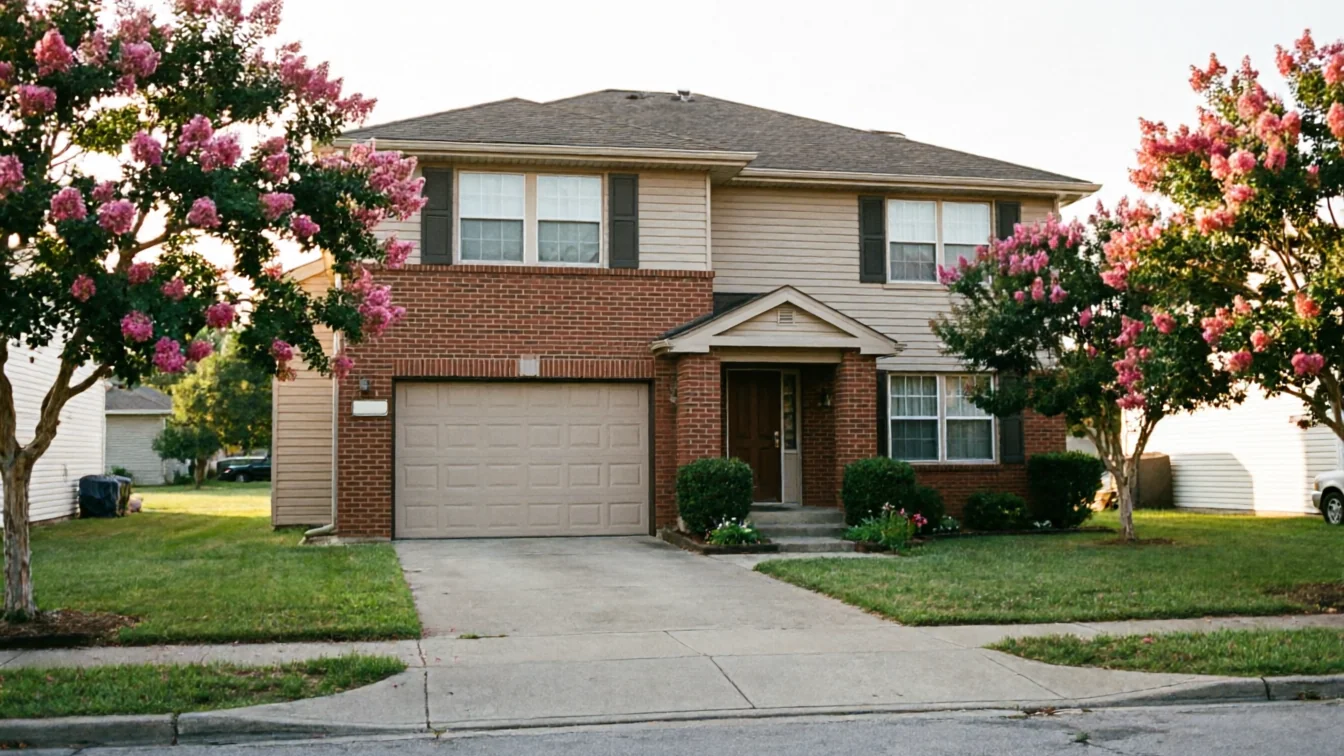
Housing across this service area mostly went up between 1976 and 2015, with the median build year sitting around 1995 and most of the stock across the 23 named communities we cover dating to the 1980s and 90s. That matters for this specific failure. Doors from that era commonly run on steel tracks mounted with brackets that were fine for 25-30 years of normal use but are now at or past the point where the mounting bolts loosen and the track pulls slightly out of alignment - not enough to notice until a roller catches the gap and jumps.
The climate here is a moderate-heat band, which doesn't crack tracks the way freeze-thaw cycles do farther north, but it does mean steel hardware runs through a wide daily temperature swing in summer. That swing expands and contracts the track and the fasteners holding it, and over two or three decades the brackets work loose a fraction at a time. Combine that with original rollers - a lot of these houses still have the factory steel or nylon rollers from construction - and you get a door that's one hard stop away from skipping the rail.
This is a track-and-bracket-age problem more than a weather-event problem here, which is part of why it shows up gradually instead of after a single storm.
Pricing
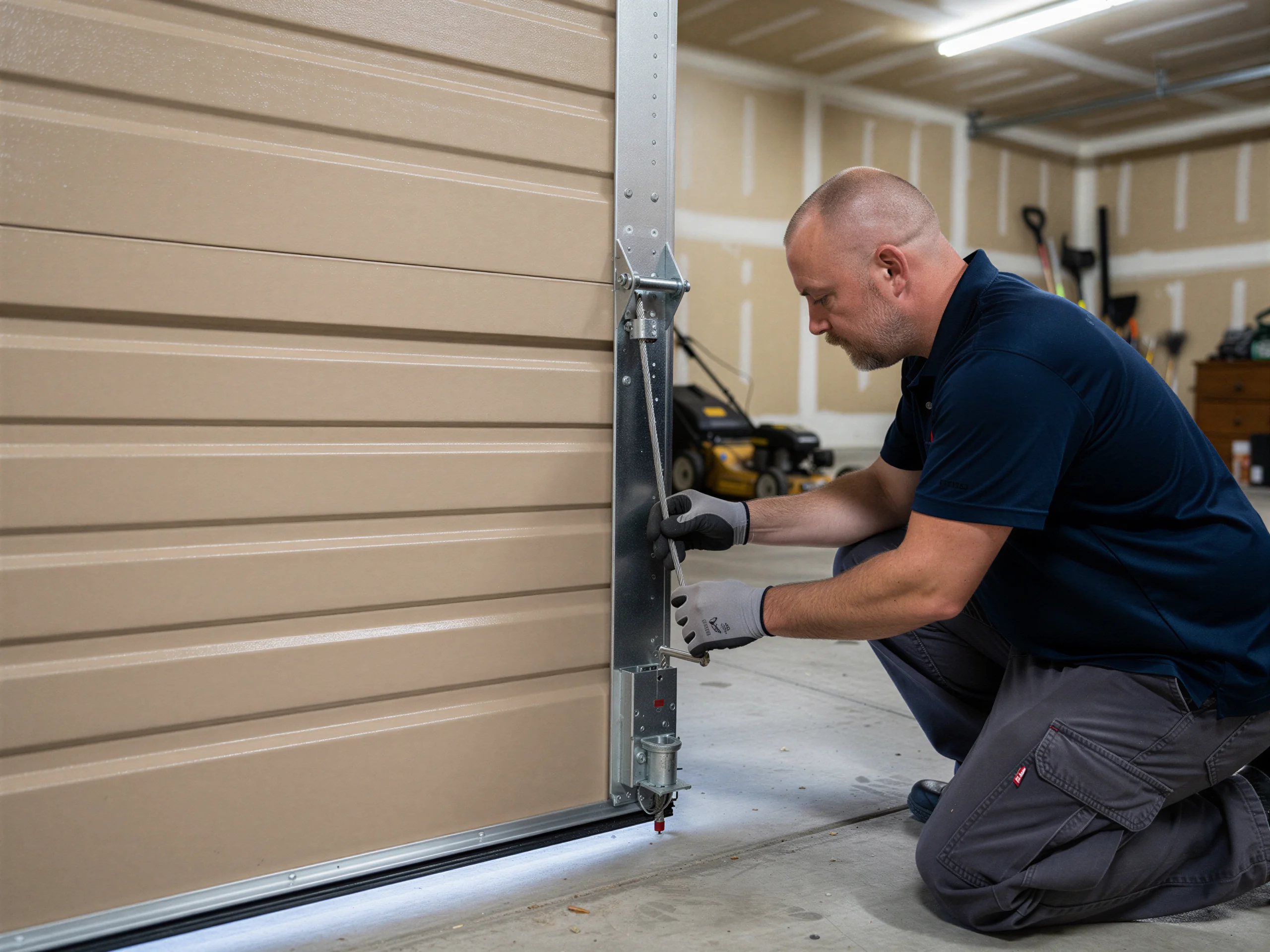
We don't have a flat number to post here, because the cost swings on a few things we can't tell from a phone call: whether the track itself is bent (replace it) or just loose (re-anchor it), whether rollers need to go with it, and whether the cables or bottom brackets took damage when the door jumped.
A door that popped one roller off a straight track is a different job than a door with a bowed rail on one side and a misaligned top section.
What we can tell you is what drives the number up or down: track condition, roller condition, how many hinges or brackets got bent in the process, and whether the opener's travel limits need to be reset once the door is back on the rail.
If you catch it early - door still mobile, just grinding - the job is almost always smaller than if the door comes fully off and a panel gets dented in the fall. We'll give you a real number after we look at the door, not before. Anyone quoting a fixed off-track price over the phone without seeing the track is guessing.
Watch-outs
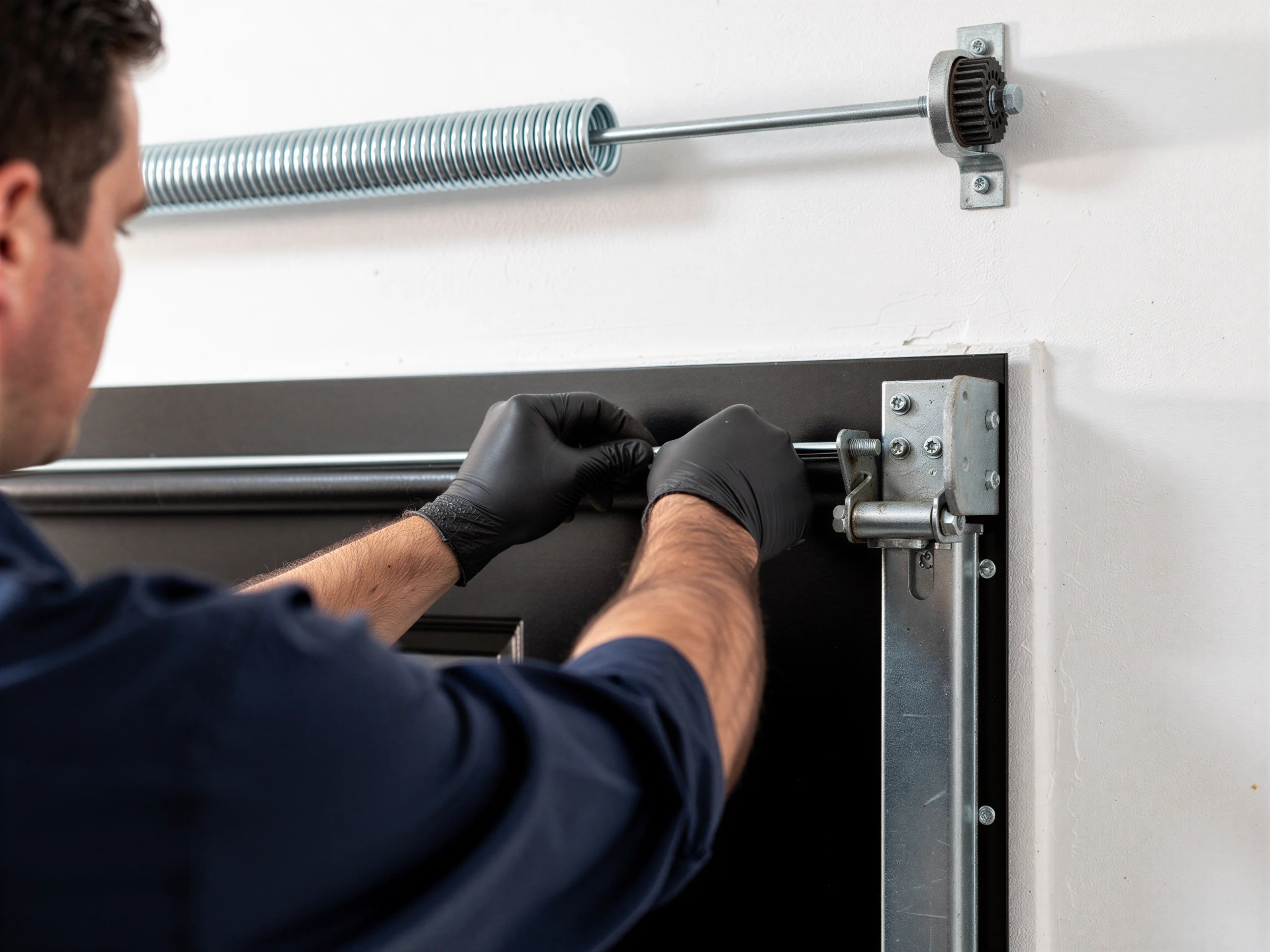
An off-track door isn't always just a track problem. If the door was under spring tension when it jumped - which it usually is, since torsion springs stay loaded whether the door is moving or not - the cables can slip off the drum, and a cable under tension that lets go is not something to handle yourself.
We won't walk a homeowner through re-tensioning that part over the phone. The other complication is timing. A door that comes off track while closing can land unevenly on the opener's force settings, and running the opener again without resetting those settings is how a bent track turns into a cracked panel.
If your door is stuck half-open, the safest move is to leave it alone and call rather than force it the rest of the way. One limitation worth saying plainly: if the track is original to a house built in the 80s or early 90s and it's bent badly, we'll usually recommend replacing that section rather than trying to hammer it straight.
A straightened track can hold for a while, but it rarely tracks true for another decade, and we'd rather tell you that up front than sell you a patch job twice.
Questions
Not if there's spring tension on it, which is almost always the case with a residential door. The springs store enough force to cause a real injury if a cable or bracket lets go while you're near the door. Leave it where it is and call - don't run the opener and don't force the panel by hand.
It usually wasn't sudden. Rollers wear and brackets loosen gradually, especially on doors original to houses built in the 80s and 90s across this area, and the track finally lets a roller skip once the gap gets wide enough. The impact that seems like the cause is often just the final straw.
No. A mild bend from a single roller slipping can sometimes be re-anchored or adjusted. A track bowed from the door falling partway, or one that's original hardware from a 1980s-90s build, is more often worth replacing than straightening, since a hammered-straight track rarely holds alignment long term.
Explore more
Ready when you are
Sugar Land Garage Door Co repairs and installs garage doors, springs and openers in Sugar Land, TX and the surrounding area.