
Wear on schedule
None of that is an emergency yet. It's wear showing up on schedule. Across this service area, housing went up mostly between 1976 and 2015, with the bulk of it dating to the 1980s and 90s.
Sugar Land, TX
Garage door maintenance built around Sugar Land's 1976-2015 housing stock and moderate heat climate - what wears out, what it costs, and what we don't fix on the spot.
Warning signs
Most calls we get for maintenance start the same way: the door still opens, but it's noisier than it used to be, the opener strains a little on the way up, or there's a shudder somewhere in the track.
None of that is an emergency yet. It's wear showing up on schedule. Across this service area, housing went up mostly between 1976 and 2015, with the bulk of it dating to the 1980s and 90s.
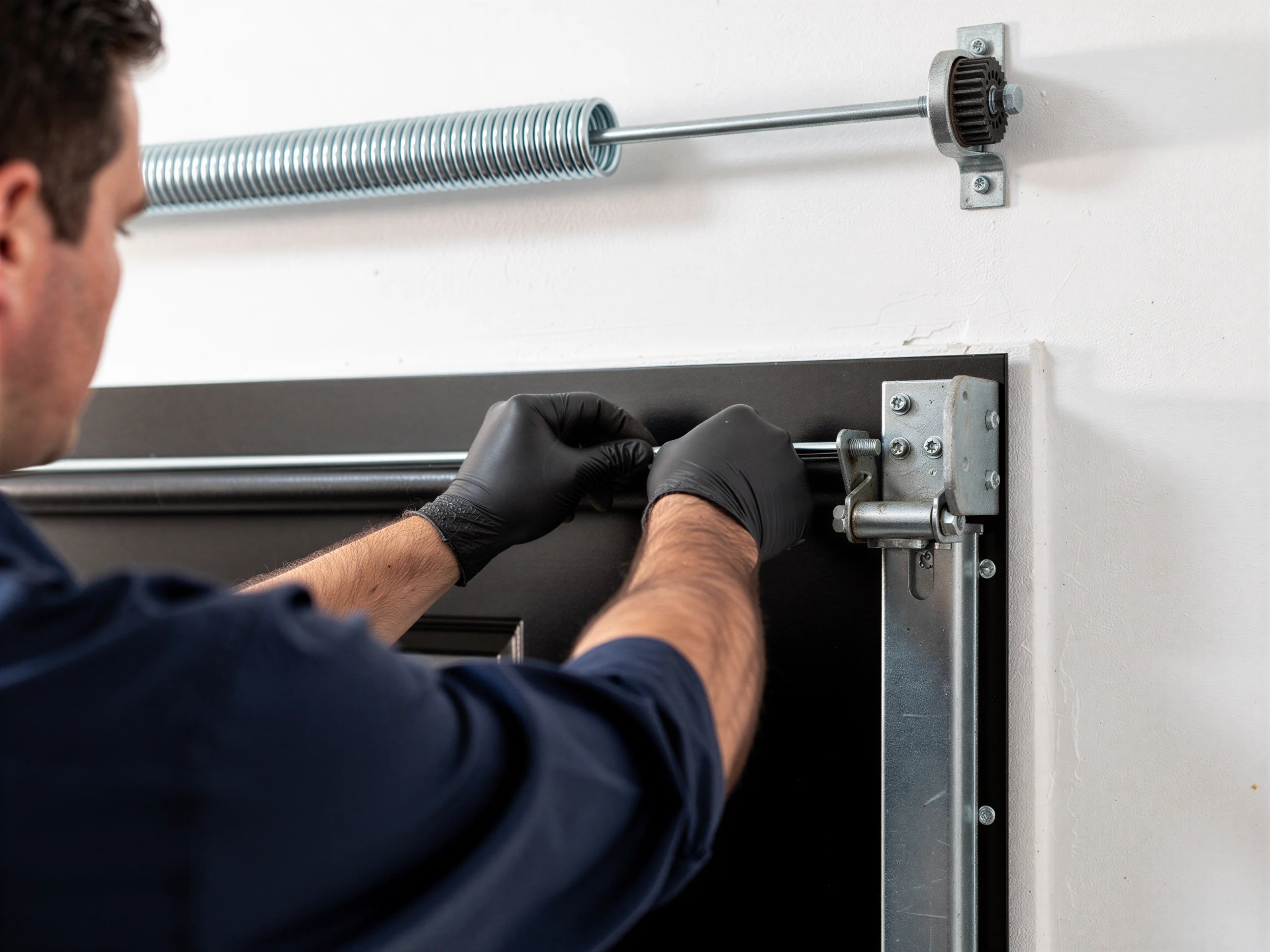
That means a huge share of the doors we look at are original equipment on original hardware, or a first replacement door installed 15 to 20 years ago. Springs have a cycle life. Rollers wear a groove into themselves. Lift cable strands fray one at a time, invisible until one does the damage.
If your garage door is doing any of the following, that's maintenance territory, not repair territory yet: it's louder than six months ago, the opener light flickers when the motor strains, the door doesn't sit flush at the bottom, or it drifts open a few inches on its own overnight. Catch it here and you're looking at adjustment and lubrication. Leave it and you're looking at a spring job or a cable replacement, usually on a weekend, usually when you're already late for something.
Local causes
The service area sits in a moderate heat climate band - not the extreme swings that crack door seals and warp panels in harsher climates, but steady high heat for long stretches of the year. That steady heat does its own kind of damage: it dries out factory lubricant on springs and hinges faster than owners expect, and it softens the nylon rollers that were standard on doors built through the 1980s and 90s. A door that's never seen a hard freeze can still be running on bone-dry hardware.
Age is the other half of it. With housing here built mostly from 1976 through 2015, and a lot of it concentrated in that 1980s-90s window, springs and openers installed at construction are now anywhere from 25 to 45 years old. Torsion springs are rated in cycles, not years, but a 30-year-old spring has usually seen more open-close cycles than its rating assumes, especially in a house where the garage doubles as a side entrance.
We also see a lot of openers that were upgraded once, in the 2000s or 2010s, without the matching hardware - new motor, same worn track and rollers. That mismatch shows up as noise and strain long before it shows up as a breakdown.
Pricing
We don't have a flat number to put here, because what a maintenance visit costs depends on what the door needs - a tune-up on a door that's been serviced before is a different job from the first service call on a door that's gone 20 years untouched.
What we can tell you is what drives the cost: how much lubrication and adjustment the springs and track need, whether rollers need replacing outright, and whether the opener's safety sensors and travel limits need resetting.
Across the service area, median household income runs around $126,167, and we see that reflected in how owners approach this - most treat maintenance as a once-a-year or once-every-two-year visit rather than something to defer indefinitely, because deferring it almost always turns into a same-day spring or cable repair at a higher cost than the visit would have been.
Ask for a number before we start, not after. Any reputable shop in this business will give you one on the spot once we've looked at the door, not after the work's done.
Watch-outs
Maintenance has limits, and we'll tell you when you've hit one. If a torsion spring is already showing rust pitting or the cable has visible fraying, we're not going to lubricate it and call it done - that's a repair job, and doing maintenance on a part that's past its service life just delays a failure that could hurt someone.
We also won't tell you a 30-plus-year-old opener is fine just because it still runs. Parts for openers that old are often discontinued, and a maintenance visit on dead-stock hardware sometimes turns into a conversation about replacement instead - we'll say so plainly rather than keep billing visits on a unit we can't really service anymore.
One honest limitation: we service garage doors and their hardware. We don't do general handyman work on the surrounding framing, drywall, or electrical beyond the opener circuit itself.
If a maintenance visit uncovers something outside that scope - a rotted jamb, a wiring issue upstream of the opener - we'll flag it and point you to someone who handles that, because it's not our trade and pretending otherwise doesn't serve you.
Questions
Given the moderate heat here drying out lubricant faster than owners expect, and how much of the local housing stock is running 20 to 45-year-old hardware from the 1976-2015 building boom, once a year is a reasonable baseline. Doors used heavily as a side entrance may need a check every six months.
It lowers the odds but doesn't guarantee it. A spring that's already pitted or past its cycle life can still fail between visits. What maintenance does reliably is catch the warning signs - fraying, rust, uneven tension - early enough to schedule a repair instead of getting an emergency call.
Depends on the age and whether parts are still available. We'll look at it honestly - if it's dead-stock hardware from the first wave of 1980s-90s construction and parts are discontinued, we'll say replacement makes more sense than another maintenance visit.
Explore more
Ready when you are
Sugar Land Garage Door Co repairs and installs garage doors, springs and openers in Sugar Land, TX and the surrounding area.