
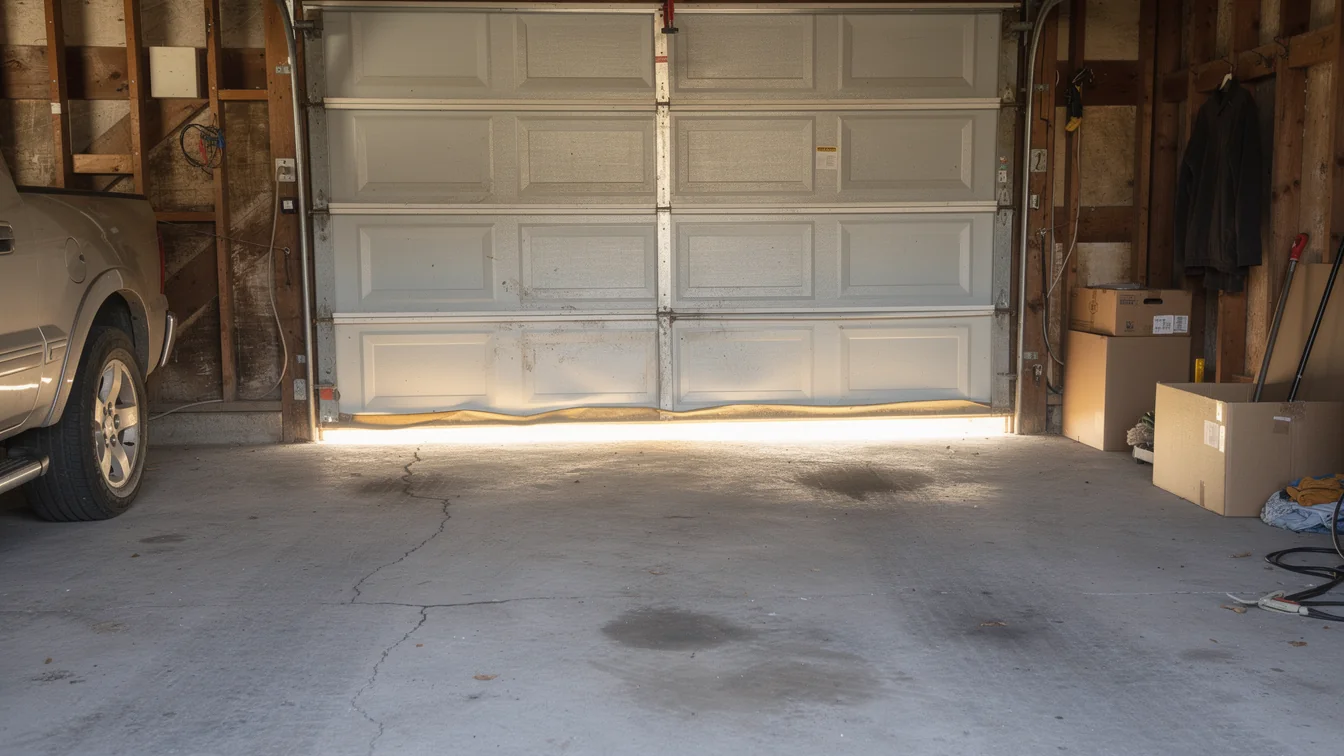
 What Sugar Land Weather Actually Does to Your Garage Door
How Sugar Land's 1976-2015 housing stock and moderate heat band wear on garage doors, and what to check first on homes near Telfair, New Territory, and Aliana.
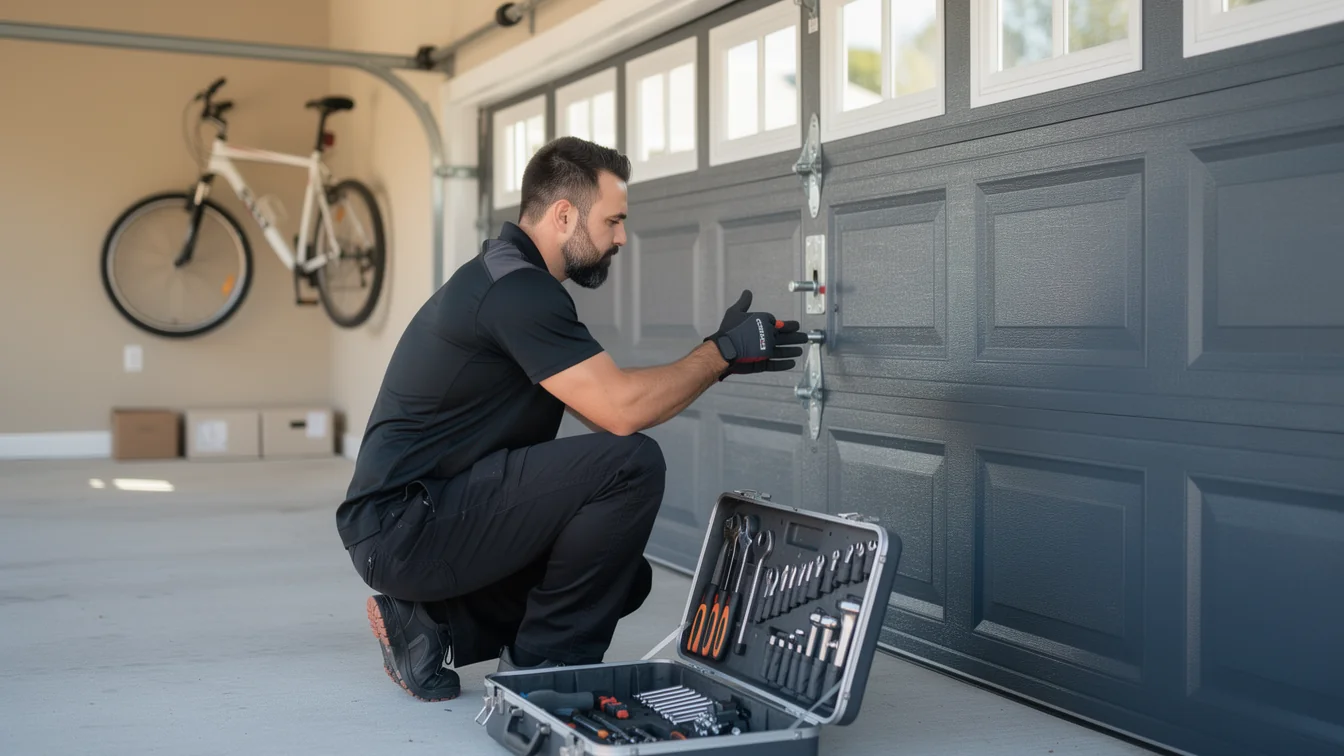
What We Actually Check When We Come Out
A look at what we actually check on a Sugar Land service call, tied to this area's 1976-2015 housing stock, moderate heat band, and the mix of neighborhoods we cover.
Local detail
Season by Season
This area sits in a moderate heat band, not a hard freeze zone, so the seasonal story on a garage door here is mostly about sustained warm months rather than ice splitting a panel. Spring and early summer bring stretches of humidity that swell wood trim around the jamb and gum up track lubricant until rollers start to chirp. Mid-summer is when steel torsion springs see the most cycle fatigue, because the metal spends months expanding in daytime heat and contracting overnight instead of staying in one state. Fall is usually the calmest stretch, and it's the best window to catch a spring before it breaks rather than after, since failures cluster in the hottest months when the metal is already under the most stress. We don't see the freeze-thaw cable and hinge failures that show up in colder-climate service calls - that's simply not what the weather here does. What we do see, year over year, is slow wear accelerated by heat cycling rather than sudden cold-snap cracking. A service call in July looks different from one in November mostly in what's already failed by the time we arrive, not in what we're looking for.
The area
What the Weather Here Does to It
Moderate, sustained heat doesn't crack steel the way a hard freeze does - it fatigues it. A torsion spring wound to spec in 1995 has been through roughly three decades of daily heat expansion and overnight contraction, and that cycling is what eventually takes it past its rated turns, not a single extreme event. Humidity is the other factor: it doesn't rust out galvanized track the way salt air does near a coast, but it does break down lubricant faster, which is why a door that was quiet in spring starts grinding by August. Wood-composite panels and jamb trim, common on houses from the 1980s and 90s part of our local stock, absorb and release moisture with the season, which is often what's actually behind a door that used to close flush and now catches on one side. None of this is dramatic weather. It's just steady, and steady wear is harder for an owner to notice until a cable frays or a spring lets go mid-cycle. A service call here is as much about reading how many heat cycles a part has absorbed as it is about the part itself.
What we find
The Situation
Housing across this service area was built mostly between 1976 and 2015, with the bulk of it dating from the 1980s and 90s and spread across roughly 23 named sections of town. That range matters because it means we're rarely dealing with a single era of hardware. A call in an older pocket closer in - Telfair, a mile west, or the TxDOT tract just southwest - often turns up original chain-drive openers and torsion springs original to the house. A call out toward Aliana or New Territory, built later in that same 1976-2015 run, more often means a belt-drive opener with a circuit board instead of a relay, and a different kind of failure entirely: sensor alignment and logic boards rather than worn mechanical parts. Across the roughly 86,692 households and 68,630 owner-occupied houses in this broader area, the two ends of that build range show up on the same day's schedule. That spread is also why we don't walk in assuming a fix before we look - a 1980s torsion setup and a 2010s belt-drive unit share almost nothing under the hood, even if the symptom the owner describes sounds identical on the phone.
How we work
What to Look At First
Start with the springs, since that's where most of the age in this housing stock shows up first. If the door is heavy to lift by hand with the opener disengaged, the spring is tired, and on a house from the earlier part of our 1976-2015 build range that's often original equipment well past its cycle count. Next look at the cables for fraying near the bottom bracket - a slow failure, not a sudden one, and one the heat cycling here accelerates. Check the track for daylight gaps where it bolts to the jamb; humidity swelling on older wood framing can pull it slightly out of line over years without anyone noticing until the door starts binding. Given the income level in this area, most owners choose to replace a dented or warped panel outright rather than patch it, which changes the math on a repair call versus a straightforward swap. One limitation worth saying plainly: we don't keep every obsolete panel width in stock for houses from the early end of that build range, so a custom or discontinued size sometimes means a parts order instead of a same-visit fix. That's rare, but it happens, and it's worth knowing before you book.
Questions
Common questions
How old does a garage door have to be before the spring is a real risk here?
Most houses in this area were built between 1976 and 2015, and a torsion spring is typically rated for a set number of cycles, not years. On a house from the 1980s or 90s stretch of that range, the original spring has usually absorbed three decades of daily heat cycling and is a reasonable candidate for replacement even if it hasn't failed yet.
Does the heat here actually damage garage doors, or is it mostly a cold-weather problem?
This area sits in a moderate heat band without hard winter freezes, so the wear pattern is different from colder regions. Sustained summer heat cycling fatigues torsion springs and breaks down track lubricant faster than it would in a milder climate, which is why most of what we replace is worn, not frozen or cracked.
Why does a service call look different depending on which part of town I'm in?
Housing here spans 1976 to 2015. Older sections closer in tend to have original chain-drive openers and torsion hardware, while newer build-out toward the west has belt-drive openers with circuit boards. The failure points are different, so what we check first depends on when your section of town was built.
Do you stock parts for older, discontinued door sizes?
Not always. Most calls are straightforward, but a custom or older panel width from the earlier end of the area's 1976-2015 build range occasionally means ordering a part rather than finishing the job the same day. We'll tell you up front if that's the situation rather than guess.
Recommendation
You Might Also Like
More garage door guides for Sugar Land homeowners.
What Sugar Land Weather Actually Does to Your Garage Door
How Sugar Land's 1976-2015 housing stock and moderate heat band wear on garage doors, and what to check first on homes near Telfair, New Territory, and Aliana.
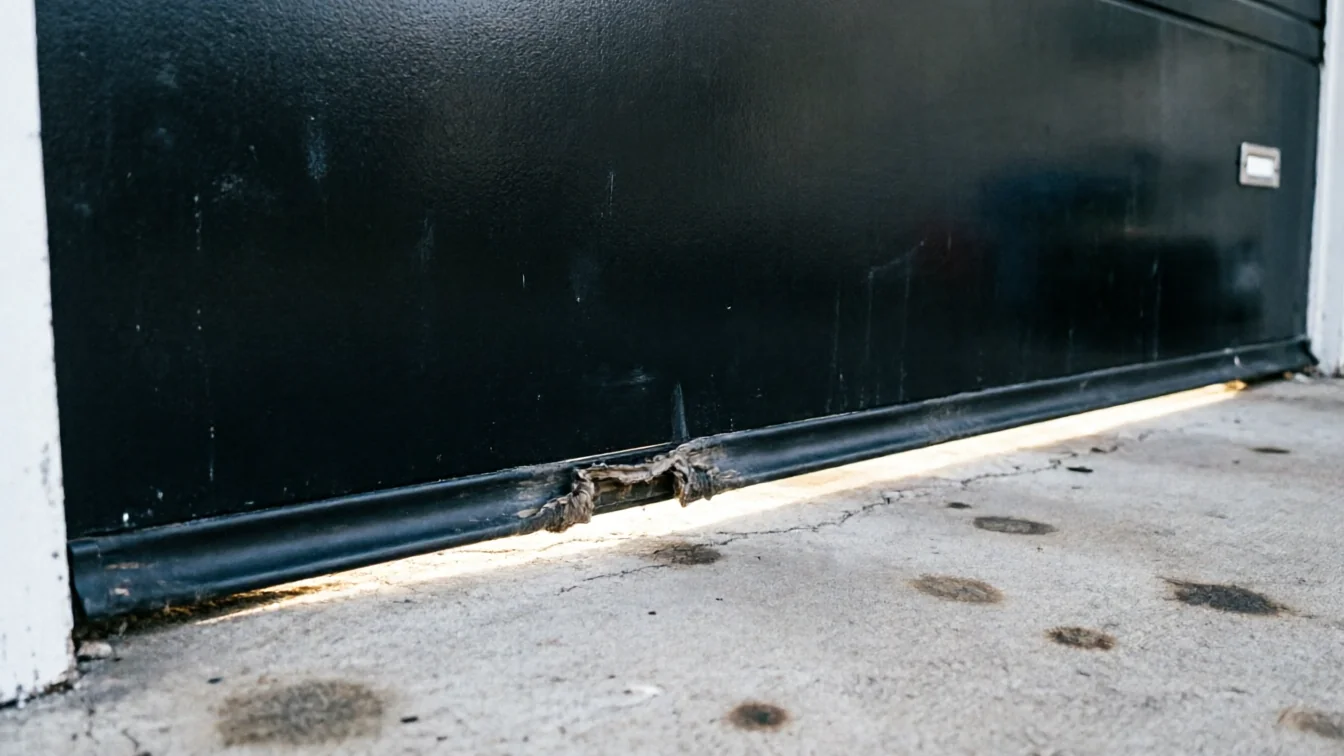 What Sugar Land Weather Does to Your Garage Door, Season by Season
How Sugar Land's moderate heat and 1976-2015 housing stock affect garage door seals, tracks, and openers, with what to check each season before a call.
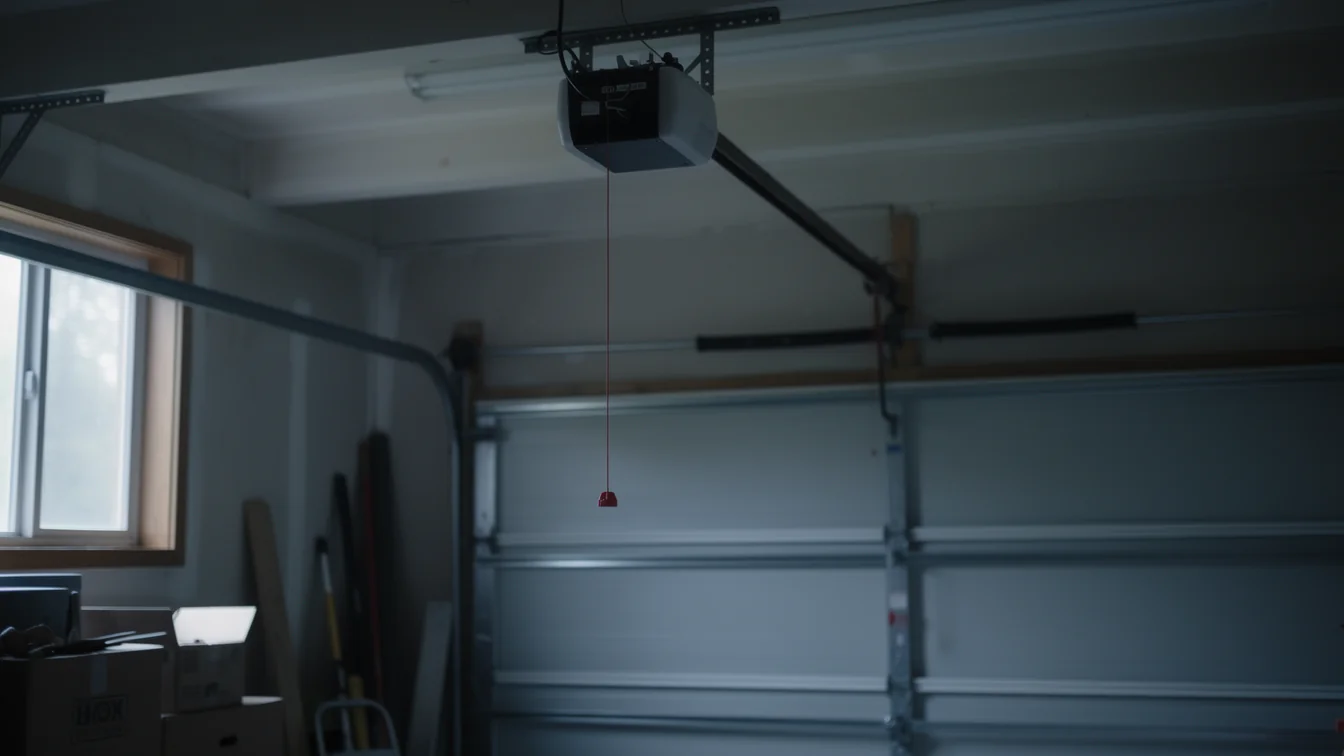 Openers and Power Cuts: What Sugar Land Houses Actually Have
Sugar Land homes built mostly 1976-2015 carry a mix of opener generations.
Ready when you are
Need a garage door sorted in Sugar Land?
Sugar Land Garage Door Co repairs and installs garage doors, springs and openers in Sugar Land, TX and the surrounding area.