
 What Sugar Land Weather Does to Your Garage Door, Season by Season
How Sugar Land's moderate heat and 1976-2015 housing stock affect garage door seals, tracks, and openers, with what to check each season before a call.
What Sugar Land Weather Actually Does to Your Garage Door
How Sugar Land's 1976-2015 housing stock and moderate heat band wear on garage doors, and what to check first on homes near Telfair, New Territory, and Aliana.
Local detail
Season by Season
Most of the doors we work on sit in homes built between 1976 and 2015, with the bulk of that stock going up in the 1980s and 90s across the 23 named subdivisions that make up this service area. That matters because a door installed in 1991 has been through three decades of Gulf Coast summers without ever seeing a hard freeze cycle like you'd get further north. Spring and fall here are short. You go from humid heat almost straight into more humid heat, and the door hardware never really gets a cold snap to tighten things back up the way dry-climate towns do. In neighborhoods like Telfair and New Territory, a few miles west of the center of town, you'll find doors from the same build decade behaving almost identically, which tells you it's the climate exposure doing the work, not any one builder's shortcut. Summer is when we see the most spring and opener calls, simply because that's when the metal expands the most and anything already marginal gives out. Winter here isn't really a season for garage doors to fail from cold. It's barely cold enough to matter. The stress on these doors is almost entirely a heat-and-humidity story, repeated every year since the house was framed.
The area
What the Weather Here Does to It
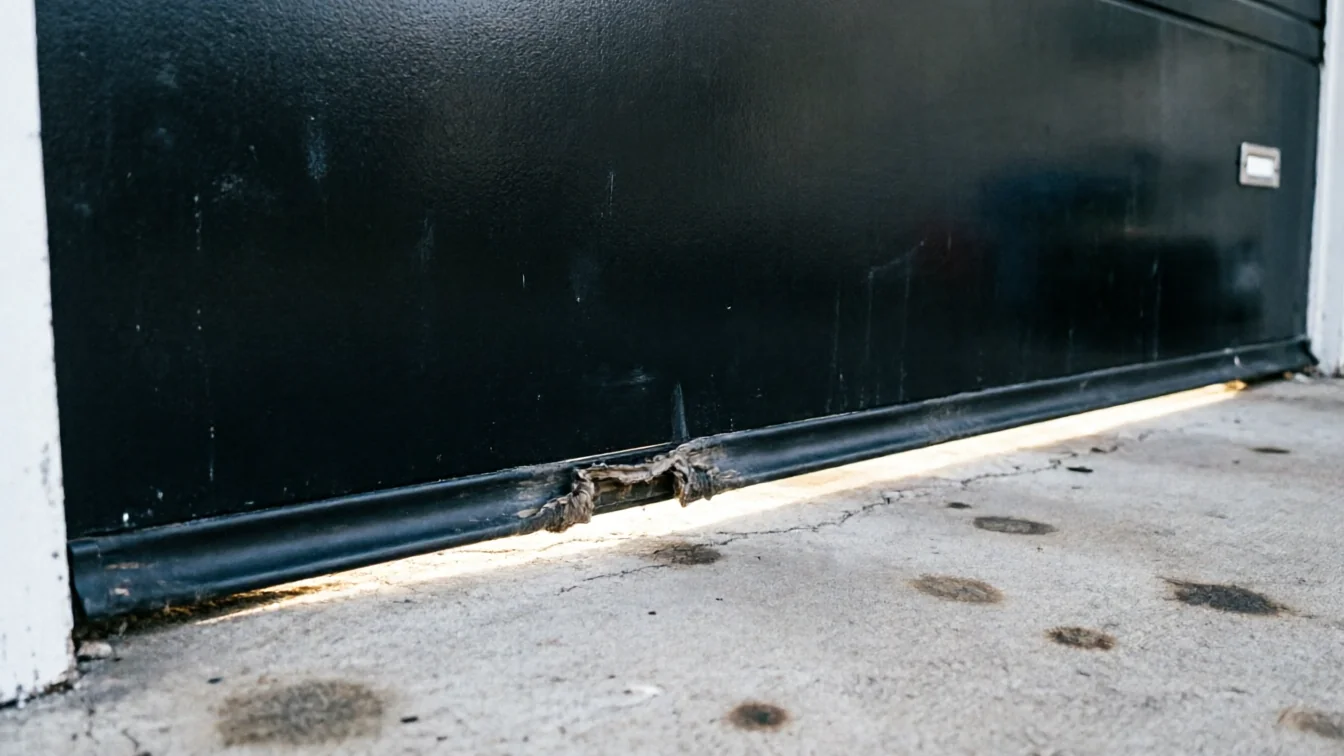
Sugar Land sits in a moderate heat climate band, which sounds mild until you account for the humidity that comes with it. Steel panels expand in the afternoon sun and contract overnight, and over a few thousand cycles that movement works bolts loose, stretches hinges, and dries out the rubber weatherstrip along the bottom panel faster than a drier climate would. Doors built in the 1980s and 90s, which describes most of what's out there in this area, used thinner steel and simpler weatherstripping than anything sold today. That's not a knock on those doors, it's just what was standard then. The humidity also gets into torsion spring coils if they're not lubricated, and galvanized coating only holds up so long before surface rust starts eating at the wire. We don't get the ice-and-snow failures you'd read about in a national maintenance article, and we're not going to pretend we do. What we get instead is slow heat fatigue: a spring that's lost a few coils of tension, a track that's walked slightly out of alignment because the framing around it has shifted with seasonal ground moisture, an opener that strains on a door it used to lift without effort.
What we find
The Situation
Across the roughly 86,692 households in this service area, about 68,630 are owner-occupied houses, and median household income runs $126,167. That combination means most of the doors we see are original or close to it, on houses people have owned long enough to notice when something's off, but haven't necessarily replaced the door itself. A door built before the 1990s, when insulation standards for garage doors started tightening up nationally, usually has a single steel skin with no foam core at all. That's the doors on houses built before insulation rules we mean when we say a house's age tells you almost everything about what's behind the door. Houses in Telfair and New Territory sit a few miles west of the center of the service footprint; out toward Stafford and Four Corners, five and six miles out, you get a similar mix of that same 1980s-90s build era. We're not going to tell you every door from that period needs replacing. Plenty are fine with a new spring and a tune-up. But an uninsulated steel door on a house from 1988 is working harder against Gulf Coast heat gain than most owners realize, and that's a separate conversation from whether the hardware is sound.
How we work
What to Look At First
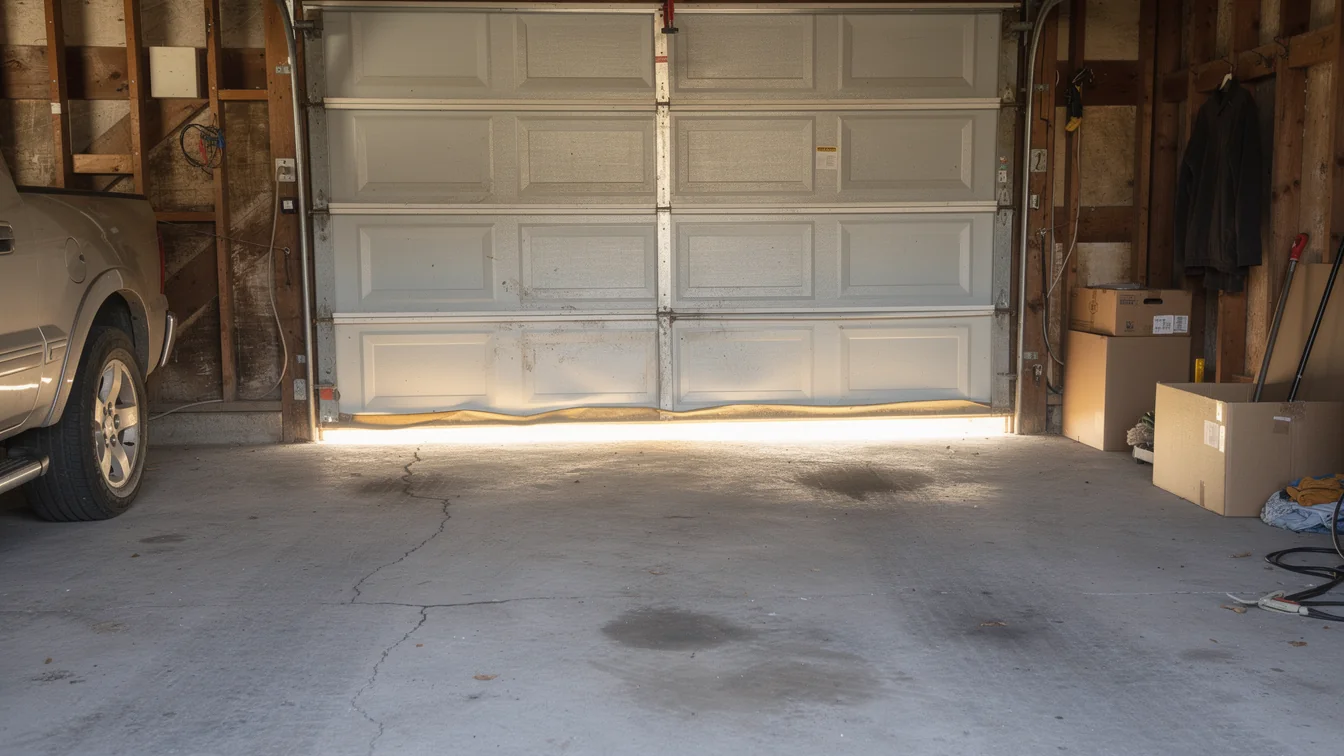
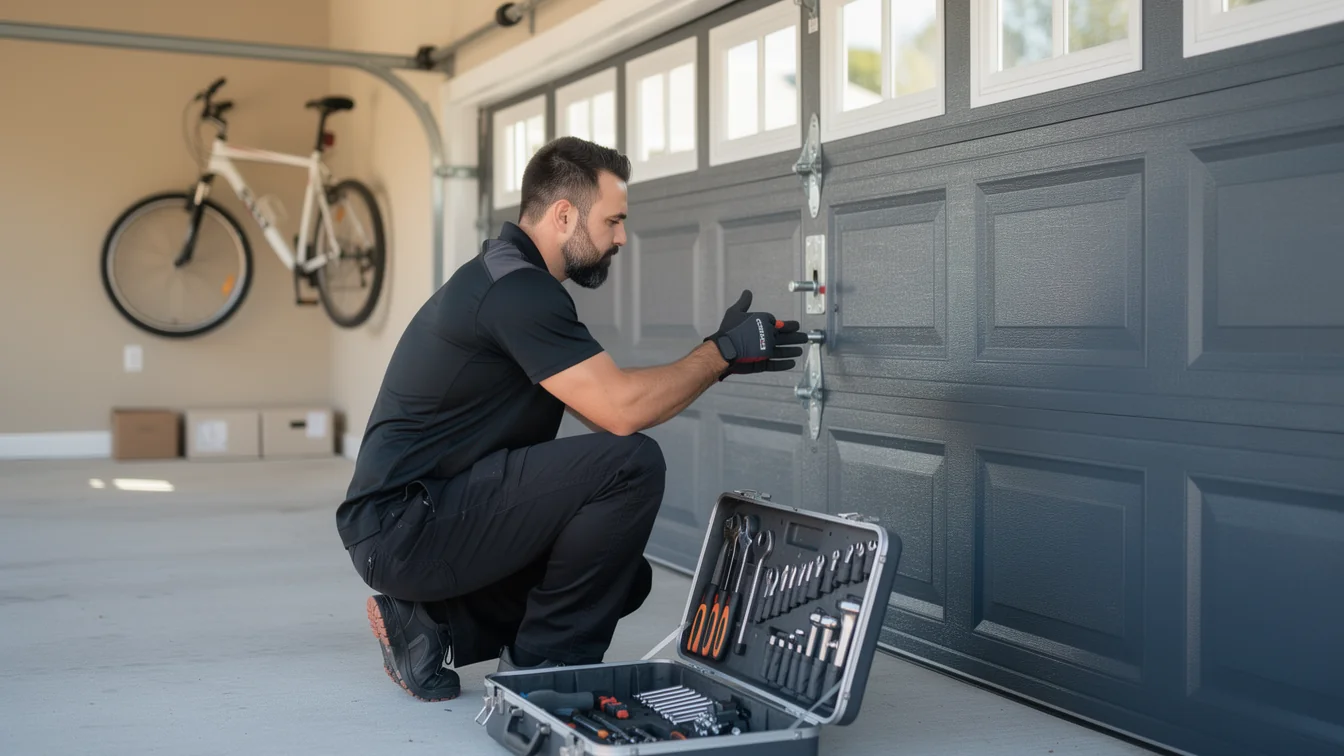
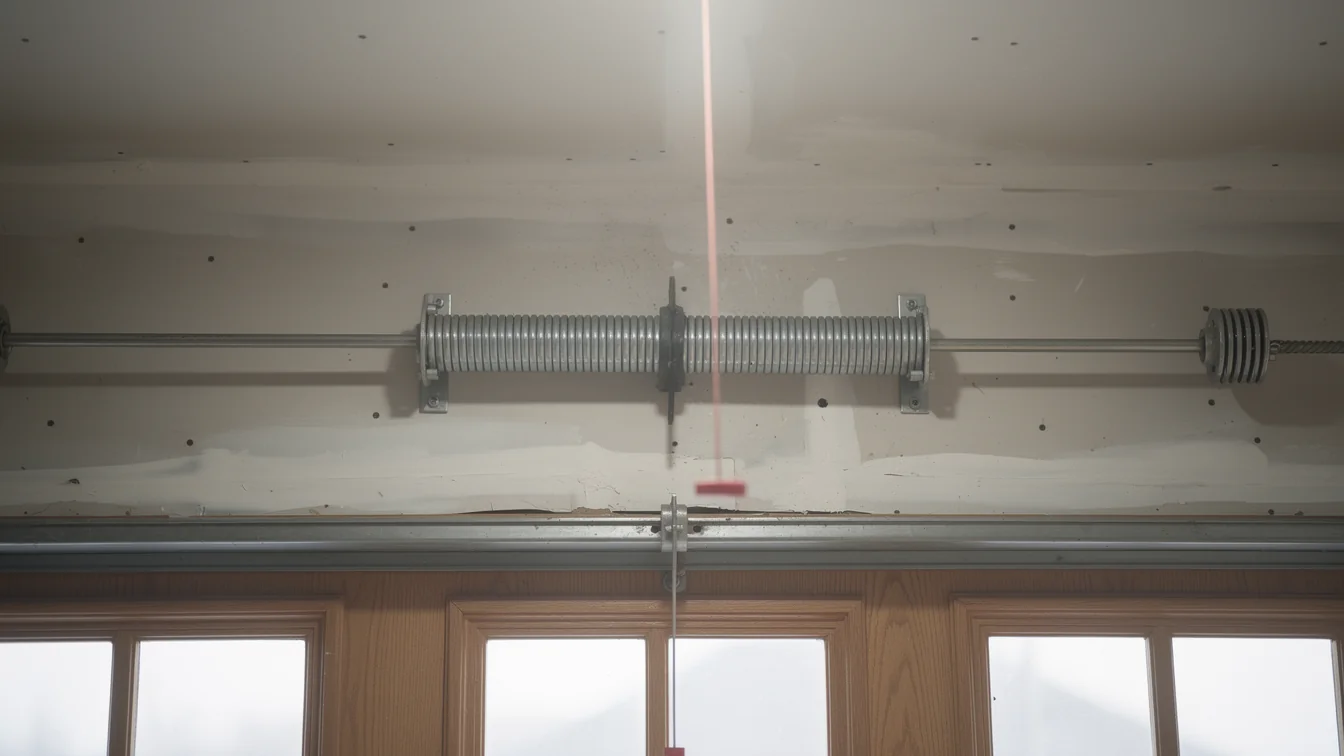
Start with the spring. On a double door it's usually one torsion spring overhead; press the emergency release and lift the door by hand. If it feels heavy or drops on its own, the spring has lost tension and that's not a DIY fix. Next, check the bottom weatherstrip for cracking or gaps. On a door from the 1980s or 90s, that seal is often the original and it dries out hard in this climate. Look at the track brackets where they bolt to the framing. Humidity-driven wood movement in houses from this build era can loosen those bolts over years, and a track that's even a little out of plumb puts uneven load on the rollers. Last, listen to the opener. A motor straining audibly on a door that used to run quiet is often fighting spring tension loss, not a motor problem. We'll say plainly: if the door is original to a house built in the 1970s or early 80s and it's an uninsulated single-skin steel panel, we'd rather talk replacement than keep patching it, because the labor to keep re-tensioning old hardware eventually costs more than a new door would.
Questions
Common questions
Why does my garage door spring keep failing in Sugar Land?
Most springs we replace here have simply worn out from heat cycling, not from any defect. Steel expands and contracts daily in this moderate-heat, high-humidity climate, and a spring on a house built in the 1980s or 90s has been through thousands of those cycles with no cold-season reset. Losing tension gradually is normal; a sudden snap usually means it was already near the end.
Is my garage door insulated?
If your house was built before the 1990s, which covers a large share of homes in this area, the original door is likely a single steel skin with no foam core. Insulation became more standard as building practices shifted through the 1990s and 2000s. Knocking on the panel tells you fast: a hollow sound means no core.
Do I need a new door or just a repair?
Depends on the door. A spring, cable, or roller issue on a structurally sound panel is usually a repair. An uninsulated single-skin steel door from the 1970s or early 80s, especially with rust at the bottom panel, is often cheaper to replace outright than to keep patching, once you add up repeated service calls.
Recommendation
You Might Also Like
More garage door guides for Sugar Land homeowners.
What Sugar Land Weather Does to Your Garage Door, Season by Season
How Sugar Land's moderate heat and 1976-2015 housing stock affect garage door seals, tracks, and openers, with what to check each season before a call.
 What We Actually Check When We Come Out
A look at what we actually check on a Sugar Land service call, tied to this area's 1976-2015 housing stock, moderate heat band, and the mix of neighborhoods we cover.
 What Sugar Land's Weather and Housing Age Actually Do to Your Garage Door
Sugar Land's moderate climate and 1976-2015 housing stock change how garage door springs and openers age.
Ready when you are
Need a garage door sorted in Sugar Land?
Sugar Land Garage Door Co repairs and installs garage doors, springs and openers in Sugar Land, TX and the surrounding area.